
Surprise birthday in Hafezieh

Tehran, the capital of Iran, is the country's largest city and its main political, cultural, and economic center. Although it is a modern metropolis, Tehran has a long history and offers travelers a fascinating mix of palaces, museums, historic bazaars, parks, contemporary architecture, and spectacular views of the Alborz Mountains.
Tehran is located south of the Alborz mountain range and is one of the best places in Iran to experience the contrast between modern urban life and centuries of Persian history. Here are some interesting facts about Tehran that may be useful for travelers:
1. Tehran became Iran's capital during the Qajar period. Agha Mohammad Khan Qajar chose Tehran as the capital in 1788, marking the beginning of the city's rapid growth and transformation into the political center of Iran.
2. Tehran was once a small village near the ancient city of Rey. Long before becoming a huge metropolis, Tehran was a relatively small settlement in the area of Rey. Its strategic location gradually helped it grow into one of the most important cities in Iran.
3. Tehran was first fortified during the Safavid period. In the mid-16th century, Shah Tahmasb I ordered the construction of a wall around Tehran. The first fortification had numerous towers and gates and marked an important stage in the development of the city.
4. Tehran's historic fortifications were later expanded. During the Qajar period, the old walls were eventually removed as the city expanded. Twelve gates were built around the city, some of which became important landmarks and entrances to old Tehran.
5. Tehran is home to some of Iran's most important royal palaces. Travelers can visit historic complexes such as Golestan Palace and Sa'dabad and Niavaran Palace complexes to see royal residences, gardens, museums, and architecture from different periods of Iranian history.
6. Tehran has some of the country's most important museums. The city is home to major cultural institutions, including the National Museum of Iran, the Treasury of National Jewels, and the Tehran Museum of Contemporary Art.
7. Azadi Tower is one of Tehran's best-known landmarks. Built in 1971, Azadi Tower combines elements inspired by traditional Iranian architecture with modern design and has become one of the city's most recognizable symbols.
8. Milad Tower offers one of the best panoramic views of Tehran. One of the tallest structures in Iran, Milad Tower is a prominent landmark and a popular attraction for visitors looking to see the vast city and the Alborz Mountains from above.
9. Valiasr Street is one of Tehran's most famous streets. Stretching from the south of the city toward the north, Valiasr Street passes through many different neighborhoods and is lined with shops, restaurants, parks, and cafés. It is an interesting way to experience everyday life in Tehran.
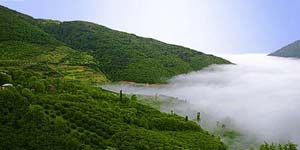
10. Tehran sits at the foot of the Alborz Mountains. On clear days, the mountains provide a dramatic backdrop to the city. The northern parts of Tehran also offer access to hiking routes and mountain areas, making the city an interesting destination for travelers who enjoy both urban sightseeing and nature.
11. Tehran is a major center of Persian food and café culture. From traditional Persian dishes and old-style teahouses to modern cafés and international restaurants, Tehran offers travelers one of the widest ranges of culinary experiences in Iran.
12. Tehran has a history stretching back thousands of years. Archaeological discoveries in the area show that human settlement around present-day Tehran dates back several thousand years, long before the city became the capital of Iran.
13. A 7,000-year-old skeleton was discovered in Tehran. In 2014, archaeologists discovered an ancient human skeleton in the Molavi area of Tehran, providing remarkable evidence of prehistoric human settlement in the region.
14. Tehran is one of the best places to see Iran's modern and contemporary culture. Alongside historic monuments and traditional markets, visitors can find contemporary art galleries, theaters, bookstores, music venues, shopping centers, and vibrant urban neighborhoods.
15. Football is extremely popular in Tehran. The city is home to some of Iran's most famous football clubs, and attending a match can be an exciting way for sports-loving travelers to experience local culture.
16. Tehran is an important center of Iranian higher education. The city is home to several of the country's major universities and has long played an important role in Iran's academic and intellectual life.
17. Tehran combines historic neighborhoods with a modern metropolis. Visitors can move from the traditional atmosphere of the Grand Bazaar and historic neighborhoods to modern shopping centers, contemporary galleries, cafés, and skyscrapers within the same city.
18. Tehran is the main gateway to northern Iran. Its location at the foot of the Alborz Mountains makes it a convenient starting point for trips toward mountain resorts, hiking areas, and destinations north of the capital.
19. Tehran's Grand Bazaar is one of the city's most atmospheric attractions. The historic bazaar is not only a place for shopping but also an opportunity to experience traditional commerce, architecture, local food, and the daily rhythm of life in the capital.
20. Tehran has international connections with many major cities. The capital maintains sister-city and international relations with cities around the world, reflecting Tehran's role as Iran's political, cultural, and diplomatic center.

Relaxing in mesmerizing nature of Iran in the summertime and enjoying the beautiful weather in Yilaq which means a place where you live in the summer.
Going in-depth in Iran, visiting all the main hot spots plus visits to Hamedan, Ali Sadr cave, Qazvin, and finally the hot springs and the amazing nature of Sarein
Tehran > Shiraz > Yazd > Isfahan > Abyaneh > Hamedan > Qazvin > Anzali > Sarein
A quick visit to two main cities of old Iran, Shiraz, and Isfahan, quickly but magnificently. Both the cities have international airports for more flexibility.
Isfahan > Shiraz
The must-see route in Iran, we will visit most of the major historical sites. Best tour to get if this is your first time traveling to Iran.
Tehran > Shiraz > Yazd > Esfahan
Short trip through the three major touristic cities of Iran to catch a glimpse of the beauty of the country. You can fly between the cities with lots of daily flights, also great quality private cars, trains, and buses are available.
Tehran >  > Shiraz >
  > Isfahan
Tehran > Ahvaz > Suse > Shiraz > Bavanat > Yazd > Esfahan > Golpaygan > Hamadan > Kermanshah
17 Days
A more thorough itinerary with emphasis on getting to know the history of Iran with a bit of nature to enjoy.


We visited Iran last April and had a wonderful time. The country is very different to how the western media portray it. It feels very safe, prosperous and relaxed. There are many women working and many men who are very involved in child care. There is no sign of religious oppression and everyone seems to tolerate a wide range of dress codes from the western to the traditional.
First of all allow me to wish you and your families and all of those at Gardeshgaran Travel Agency a very happy and prosperous Norooz. I hope that this New Year brings to you all the best in happiness and health and prosperity.
I wanted to take some time while my thoughts are still fresh to give you some feedback on our recent tour in Iran. As you know this is my third time touring and also my third time working with your agency. I was very pleased with the attention that you have given me in my need for information.
After being home for almost one week I would like to take the time to thank you again very much for your help and support you gave us in Iran.As you probably realized, we had to change and shorten our travel plan in Iran for personal reasons.
But despite the short time we spent there, we had a wonderful and unforgettable holiday.
Just a little note of thanks to you and your company for the lovely gift that you sent me via Mr Colin MIller.
As I live in a different town to Mr Miller I don't get to meet with him very often but he did phone me when he returned from his holiday and said he had a gift for me from your company so two weeks ago I visited his town and he gave me the gift..
After coming back to Romania from our long journey in Iran we would like to thank you a lot for all your efforts to make our holiday in your beautiful country a great one. We saw a lot of wonderful places and met very nice and interesting people. Iran is indeed a country worth while travelling through! We are very grateful to you for the perfectly organized route and for the reliable and highly professonal guides and drivers.
After coming back to Romania from our long journey in Iran we would like to thank you a lot for all your efforts to make our holiday in your beautiful country a great one. We saw a lot of wonderful places and met very nice and interesting people. Iran is indeed a country worth while travelling through! We are very grateful to you for the perfectly organized route and for the reliable and highly professonal guides and drivers.
Our holding as one of the most innovative, pro-active retail travel companies in the country works in the fields of incoming, outgoing, education, ticketing, and a major supplier of discounted domestic airfares in three branches.
Feel Free to Contact us for any reason. Consult with our travel guides for free.
Tel : +98 939 339 6969
Also on Whatsapp
Email : [email protected]




Iran Travel Expert
Is there anything I can help you with?.
09.00